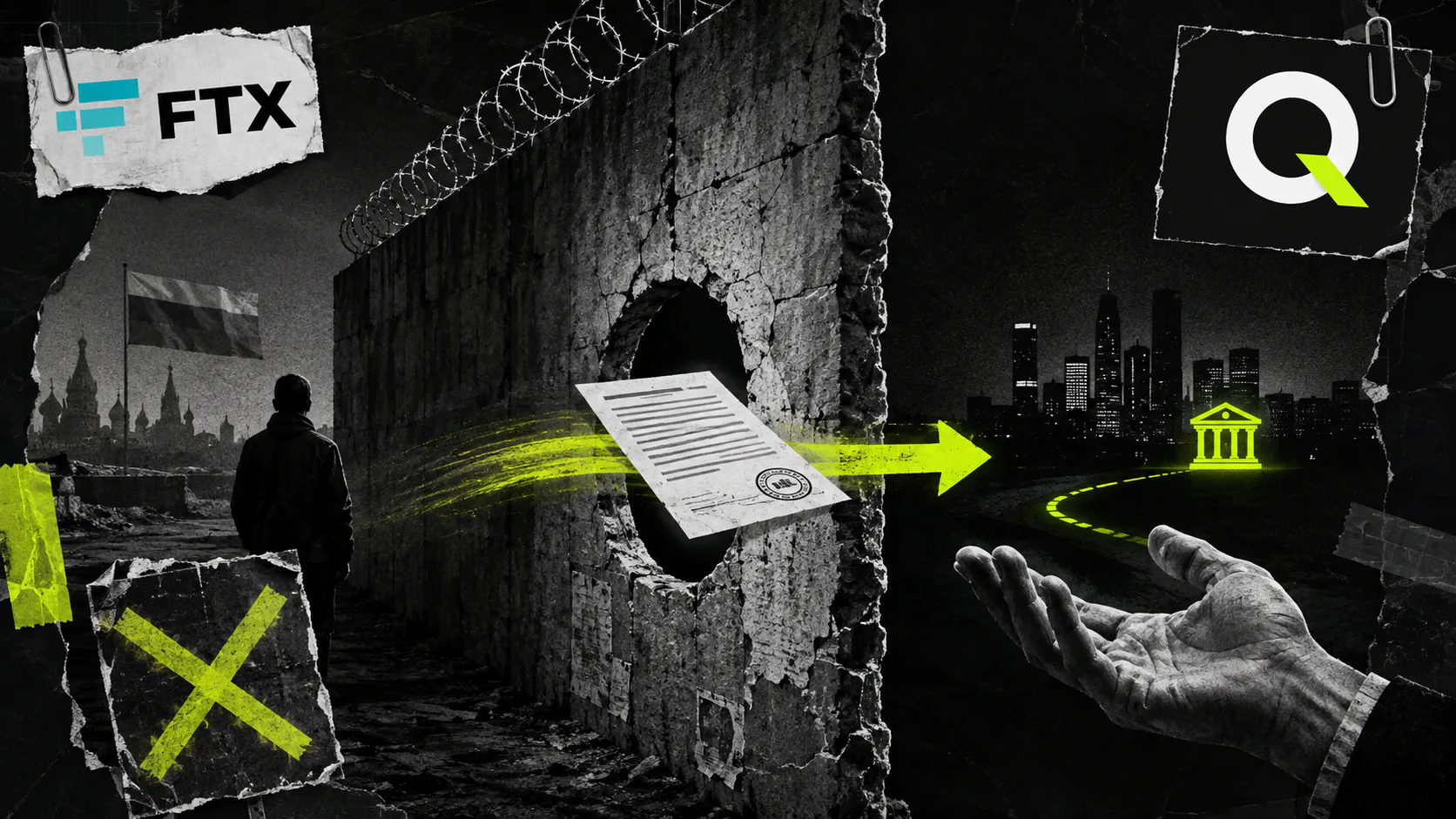
The fourth distribution round closed March 31, 2026 - $2.2 billion sent - and the fifth distribution took place on July 31, 2026 (record date June 16, 2026). Cumulative distributions since January 2025 now stands at more than $10 billion. If you're from Russia, Belarus, or Ukraine and haven't received anything, there are two possible reasons: distributions are genuinely blocked by your jurisdiction or KYC issues, or you haven't completed the required steps.
Either way, selling your claim is a real option. For most CIS creditors, it's the only realistic path to getting paid at all.
What Actually Happened with Restricted Jurisdictions
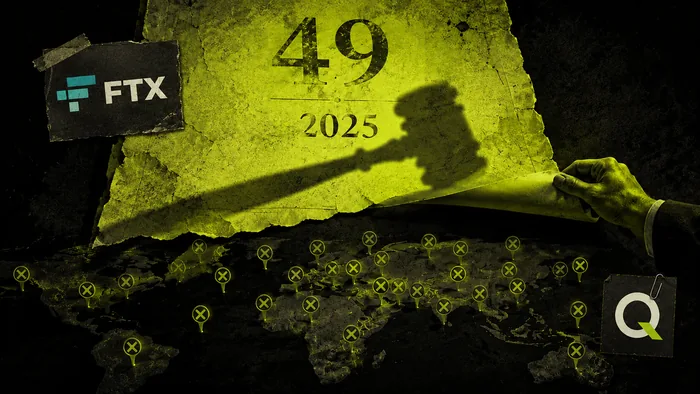
In July 2025, the FTX Recovery Trust filed a motion to withhold distributions from creditors in ~49 countries - including Russia, Belarus, Ukraine, and China. It created widespread panic. Then on November 3, 2025, the Trust withdrew that motion entirely, largely due to pushback from over 300 creditors.
View jurisdictions not currently eligible for distribution
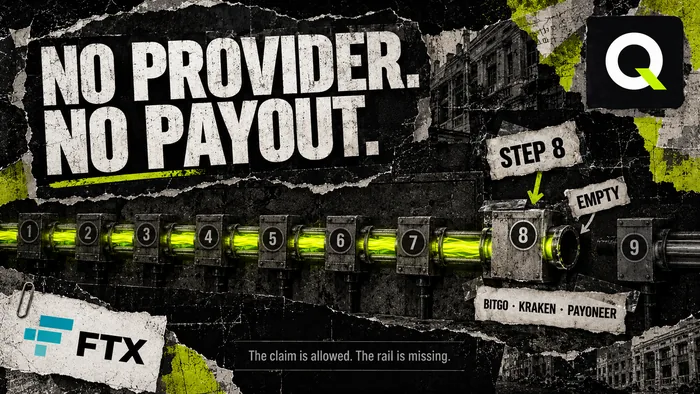
As of October 1, 2026, FTX lists these jurisdictions as not eligible for distributions - residents cannot select a Distribution Service Provider (BitGo, Kraken, Payoneer) in the FTX Customer Portal. Source: FTX Support.
Afghanistan · Algeria · Bangladesh · Belarus · Burundi · Cambodia · Cameroon · Central African Republic · Chad · China · Colombia · Congo (Democratic Republic) · Congo (Republic) · Cuba · Egypt · Equatorial Guinea · Ethiopia · Fiji · Gabon · Honduras · Iran · Iraq · Kuwait · Lebanon · Lesotho · Libya · Macau · Malawi · Maldives · Moldova · Morocco · Myanmar (Burma) · Nepal · North Korea · Qatar · Russia · Rwanda · Saudi Arabia · Somalia · Sudan · Syria · Tunisia · Ukraine · Western Sahara
This is an operational DSP limitation, not in itself a forfeiture of your claim. But FTX has warned that a holder who does not onboard with a distribution provider within six months of July 31, 2026 (around January 31, 2027) may forfeit distributions on the claim. The restriction follows the holder's residency - selling to a buyer outside these jurisdictions remains a valid route. FTX states it continues to assess eligible jurisdictions, and the list may be updated.
The practical problem for CIS creditors isn't a legal ban - it's infrastructure. BitGo, Kraken, and Payoneer (the three official distribution providers) have varying willingness to onboard users from sanctioned countries. Belarus is the hardest. Russia is nearly impossible through official channels. Ukraine is workable for most holders with foreign residency - note that as of October 1, 2026 Ukraine itself is on the DSP not-eligible list above, so receiving directly from inside Ukraine hits the same Step 8 wall.
This is why selling the claim is often the cleaner path.
How Selling an FTX Claim Works
When you sell your FTX claim, you're not selling an account. You're transferring the legal right to receive future distributions to a new entity - typically a buyer incorporated in a non-restricted jurisdiction - Qredax, for example, or an entity in the Cayman Islands.
The restriction follows the holder, not the claim. Once the claim transfers to a buyer such as Qredax that passes its own KYC, the distribution block disappears entirely.
The claim itself stays valid in the FTX Chapter 11 case - the jurisdiction flag attaches to the holder of record, not to the underlying claim. Distributions on it, however, remain subject to FTX's six-month provider-onboarding deadline (around January 31, 2027).
The legal instrument is called a Sale and Assignment of Claim (SAC) - a standard, well-established document under US bankruptcy procedure, as outlined in the official FTX Sale of Claims Guidelines.
Step-by-Step Process
Check your claim status on Kroll
Go to restructuring.ra.kroll.com/FTX and find your claim number. Status should be Allowed. If Disputed or Expunged - the process is different, contact us first.
Submit for evaluation
Send your claim number, class (5A, 7, etc.), and face value. You'll receive a firm price, typically within one business day. No obligation to accept.
Sign the SAC agreement
A standard Sale and Assignment of Claim, signed digitally via Dropbox Sign. Takes 10 minutes. No notarization required for most cases.
Receive payment
Settlement in USDT TRC-20 (or BTC/ETH) after the SAC agreement is signed. The blockchain TXID is the on-chain receipt of settlement.
Buyer handles the rest
The buyer files a Notice of Transfer with the US Bankruptcy Court (Rule 3001). Kroll updates the register. All future distributions go to the buyer. Your part ends at step 4.
What Price Should You Expect
The secondary market for FTX claims is liquid. Prices move with each distribution announcement. As of May 2026:
| Claim Type | Qredax offer | Notes |
|---|---|---|
| Class 5A (Dotcom, >$50K), clean KYC | up to 95% | Best rate, immediate |
| Class 7 (Convenience, <$50K) | up to 70% | Clean, immediate |
| KYC stuck / In Processing | Case-by-case | Risk-adjusted |
| Bahamas Process (PwC) | 75-85% | Slower adjudication |
| Disputed claim | Case-by-case | Requires review |
Do You Need to Complete KYC First?
Not necessarily. This is a common misconception.
Your KYC status determines whether you can receive distributions directly. Whether a claim with unfinished KYC can be transferred depends on the claim, the claims procedure and the checks required for the transaction. The buyer also completes its own KYC as the new holder of record.
If your KYC has been stuck "In Processing" for months, you can still ask for an offer. The buyer factors that uncertainty into pricing - the claim is priced individually rather than off a published range - and the agreement sets out any conditions the sale depends on.
Belarus Specifically
Belarus is the most complicated jurisdiction for direct FTX distributions. EU sanctions create additional compliance barriers for anyone physically located in Belarus: the 18th package (July 2025) restricted ownership and control of MiCA-licensed providers, and the full ban on crypto-asset services has been in force since August 25, 2026. Even with KYC "Verified", Step 8 (DSP selection) is effectively blocked for most Belarus residents.
Two paths that actually work:
- You have foreign residency (UAE, Georgia, Poland, etc.): from your registered email, ask FTX KYC support ([email protected]) how to update your residence, then upload your residence permit and a utility bill dated within 60 days through the KYC page of the claims portal - not as email attachments. The update typically takes 2-4 weeks.
- You don't have foreign residency: sell the claim. The Qredax buyer entity has no Belarus connection and no sanctions exposure. You get paid in USDT immediately.
Documents You'll Need
- Your Kroll claim number (restructuring.ra.kroll.com/FTX)
- Screen recording of your Kroll portal - claim status, amount, your name
- Passport scan (name must match Kroll exactly)
- USDT wallet address (TRC-20) for payment
Sell Now vs. Wait
If you're a clean Class 5A creditor with no jurisdiction issues, verified KYC, and access to BitGo/Kraken - waiting might make sense. If you want to test the official route first, see whether you can receive the payout officially from Russia.
Selling is likely better if:
- You're in Belarus or Russia and can't select a DSP
- Your KYC has been stuck for more than 8 weeks
- You need liquidity now and can't wait through multiple rounds
- Your claim is disputed or expunged
- You don't have access to BitGo, Kraken, or Payoneer in your country
Check what your claim is worth
Enter your customer code - we will show an estimate that accounts for class and KYC status. Free, no obligation.
Open the calculatorFAQ
Get a firm price on your FTX claim.
Send us your claim number. We'll respond with a firm offer, typically within one business day - no obligation to accept.
Get a Quote