Most questions about selling an FTX claim are about the moment before signing - the price, the buyer, the wording of the contract. There is a second question that matters just as much and gets asked far less: once the deal is done, is it actually done? Can the buyer change their mind, claim something went wrong, and try to pull the claim back?
For a seller, this is the real test of a claim sale. You are giving up a legal right that will pay out over the next few years. If a buyer could reverse the transfer at will, you would have sold nothing - you would have lent your claim to someone with an exit option you do not have.
This guide is about finality. It explains what makes an FTX claim transfer final, why a completed and paid transfer is not something a buyer can simply unwind, how the SAC's promises run in both directions, and what a seller should insist on so that "irrevocable" works in their favour. If you want the basics of what the contract itself contains, start with our guide to the SAC agreement and come back here.
Can the Buyer Reverse an FTX Claim Sale?
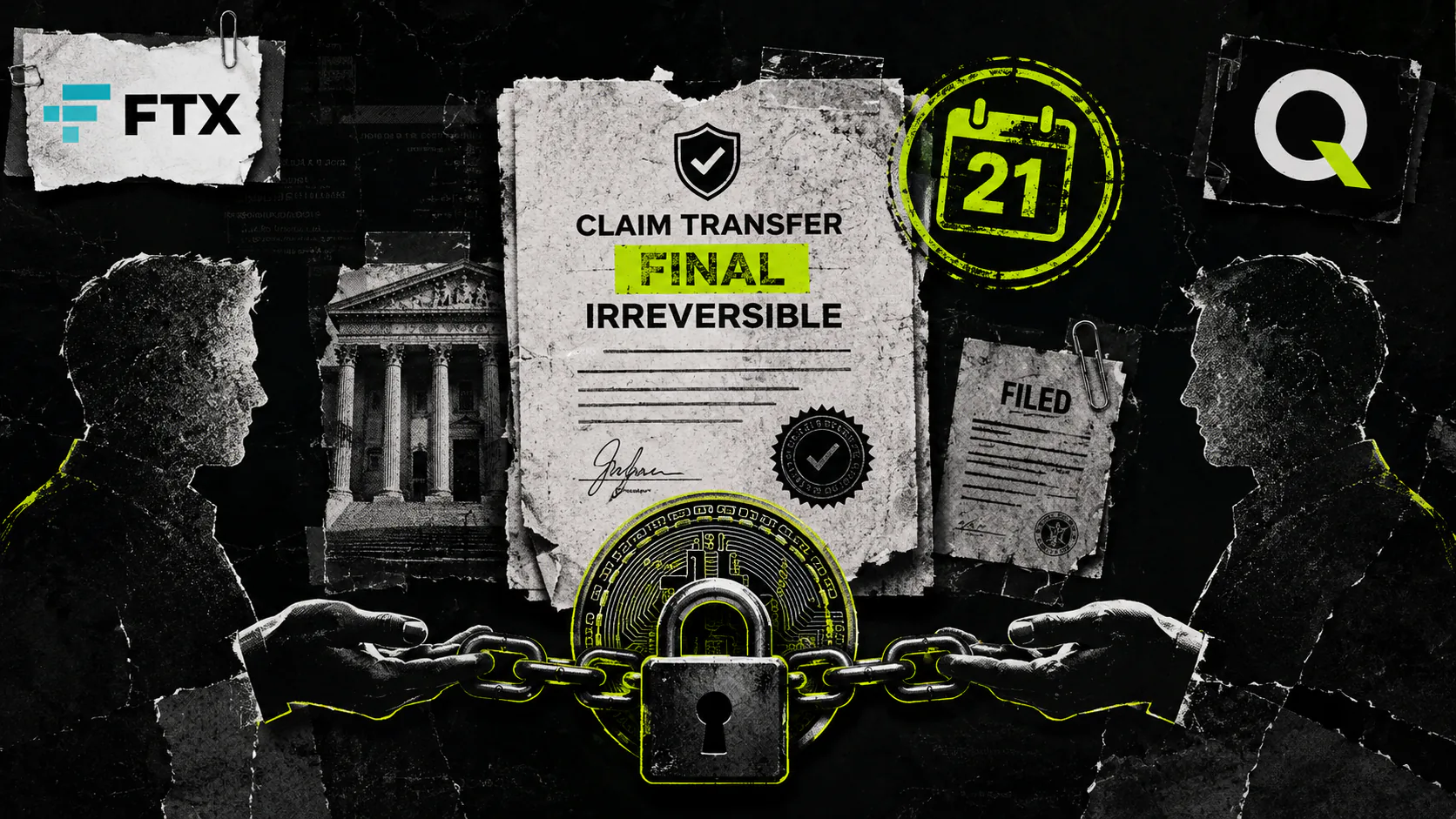
A buyer’s ability to challenge a sale depends on the agreement, the facts and applicable law. A completed transfer is not simply a card-payment chargeback, but recording the transfer does not make the contract immune from challenge.
A signed SAC, a recorded transfer and payment are separate parts of the transaction. Check what each record establishes rather than treating one as proof that every obligation has been discharged.
The parties may agree to reverse a transaction, and disputes can arise over matters such as fraud or breach of contract. Whether a particular challenge is available cannot be decided from the portal status or the 21-day period alone.
The Rule 3001(e) Notice Period and the Sale Agreement
The transfer notice procedure and any dispute under the sale agreement are separate matters. A change in the claims register does not, by itself, settle every contractual issue between buyer and seller.
FTX’s transfer guidelines require a Notice of Transfer on the public Chapter 11 docket. Kroll validates the transfer and sends notice, starting the 21-day period. The clock does not start simply because you signed the SAC or filed the notice.
Check the transfer record and any objection separately from the payment terms. Our SAC guide explains the notice period and payment timing.
A Recorded Transfer and a Payment Are Separate Records
A transfer record identifies the recorded holder; a payment record shows a payment. Neither record replaces the terms of the SAC.
First, check the assignment: which claim and payment rights were transferred, whether the transfer was validated, and whether an objection was raised.
Second, check settlement: what was paid, when, and under which contractual conditions. Receipt of USDT does not by itself determine whether a party has a legal repayment claim.
If a buyer seeks to reopen a completed sale, identify the clause or legal basis they rely on. Do not assume either that a demand is valid or that a completed transfer makes every demand impossible.
The SAC's Representations Cut Both Ways
The representations and warranties in a SAC are often described as the seller's promises - that you own the claim, that you have not sold or pledged it, that there is no undisclosed defect. That is half the picture. A properly drafted SAC also contains the buyer's representations, and those work in the seller's favour.
The buyer typically represents that it has the authority and the capacity to enter the agreement, that it is acting for itself, and that it understands it is buying a bankruptcy claim with all the uncertainty that carries. A buyer who has signed those statements has, in writing, accepted the deal as it stands.
The buyer’s representations are part of the agreed allocation of risk. Read them alongside any termination rights, conditions, indemnities and remedies in the signed SAC.
The seller’s representations should be accurate and limited to what the seller can confirm. For example, an undisclosed earlier transfer may raise a contractual issue; the consequences depend on the agreement and applicable law.
Why Settlement Timing Decides How Exposed You Are
Finality on paper is one thing. Whether you are actually protected depends heavily on when you are paid relative to the transfer.
There are three broad patterns, and they are not equally safe for the seller:
| Settlement pattern | Seller's exposure |
|---|---|
| Paid in full before signing / at signing | Lowest. You hold settled USDT before giving anything up. |
| Paid at the point the Notice of Transfer is filed | Moderate. Acceptable when defined precisely in the SAC. |
| Paid only after the 21-day window closes | Highest. You have signed and the transfer is filed while still unpaid. |
The pattern to be wary of is one where you sign the SAC, the buyer files the transfer, and payment is promised only at some later point - "after processing", "after the window", "after distribution". In that arrangement you have done your side and you are waiting on the buyer's. A careful seller closes that gap by insisting that settlement is tied to signing, or to the filing of the transfer, and that the timing is written into the SAC as a hard term rather than left vague.
For a fuller treatment of when money actually arrives, see our separate guide on claim sale payment timing. The principle here is simple: the less time you spend signed-but-unpaid, the less any question of the buyer's behaviour can affect you.
What a Seller Should Insist On
Finality protects you only if the deal is built so that you reach the finish line in a strong position. Before you sign, hold out for the following:
- Defined settlement timing. The SAC should state exactly when USDT arrives, tied to signing or to the filing of the Notice of Transfer - not to an open-ended future event.
- A named buyer entity. You are assigning your claim to a company with a legal name. A named counterparty is one you can hold to the contract; an anonymous handle is not.
- Mutual representations. The buyer should make its own representations, not only collect yours. A one-sided SAC is a warning sign.
- No clause letting the buyer rescind at discretion. Read for any language that lets the buyer cancel "at its sole discretion" or reclaim payment after the fact. A clean SAC does not contain one.
- Accurate representations from you. Only state what you can confirm about your claim. Read the consequences of a breach and any continuing obligations in the signed agreement.
None of this is exotic. It is the difference between a transfer that is final in your favour and one that is final only against you.
"Irrevocable" Protects You as Much as It Binds You
The effect of an “irrevocable” clause depends on the agreement as a whole. Read it alongside conditions, termination provisions and remedies rather than treating the word as a guarantee against any later dispute.
A sale allocates specified recovery rights to the buyer in exchange for the agreed price. The SAC should identify those rights and the obligations, if any, that continue after settlement.
A clear contract, documented payment and an accurate transfer record address different risks. Keep copies of all three; none should be used as a substitute for the others.
Check what your claim is worth
Enter your customer code - we will show an estimate that accounts for class and KYC status. Free, no obligation.
Open the calculatorFAQ
Sell once, and have it stay sold.
Send us your claim number, class, and jurisdiction. We respond with a firm offer within one business day, and the SAC defines settlement timing before you sign - an NDA covers your details first. No obligation to accept.
Get a Quote