Selling an FTX bankruptcy claim is a routine transaction. Claims change hands every week under a defined legal process, and creditors who cannot or do not want to wait for the FTX Recovery Trust often sell for a clean exit. The transaction itself is safe when it is done properly.
The problem is that the FTX recovery is large, public, and slow - and that combination attracts scammers. More than $10 billion has been distributed since January 2025, and a lot more is still owed. Where there is money waiting and creditors who feel stuck, fake buyers and phishing operations follow.
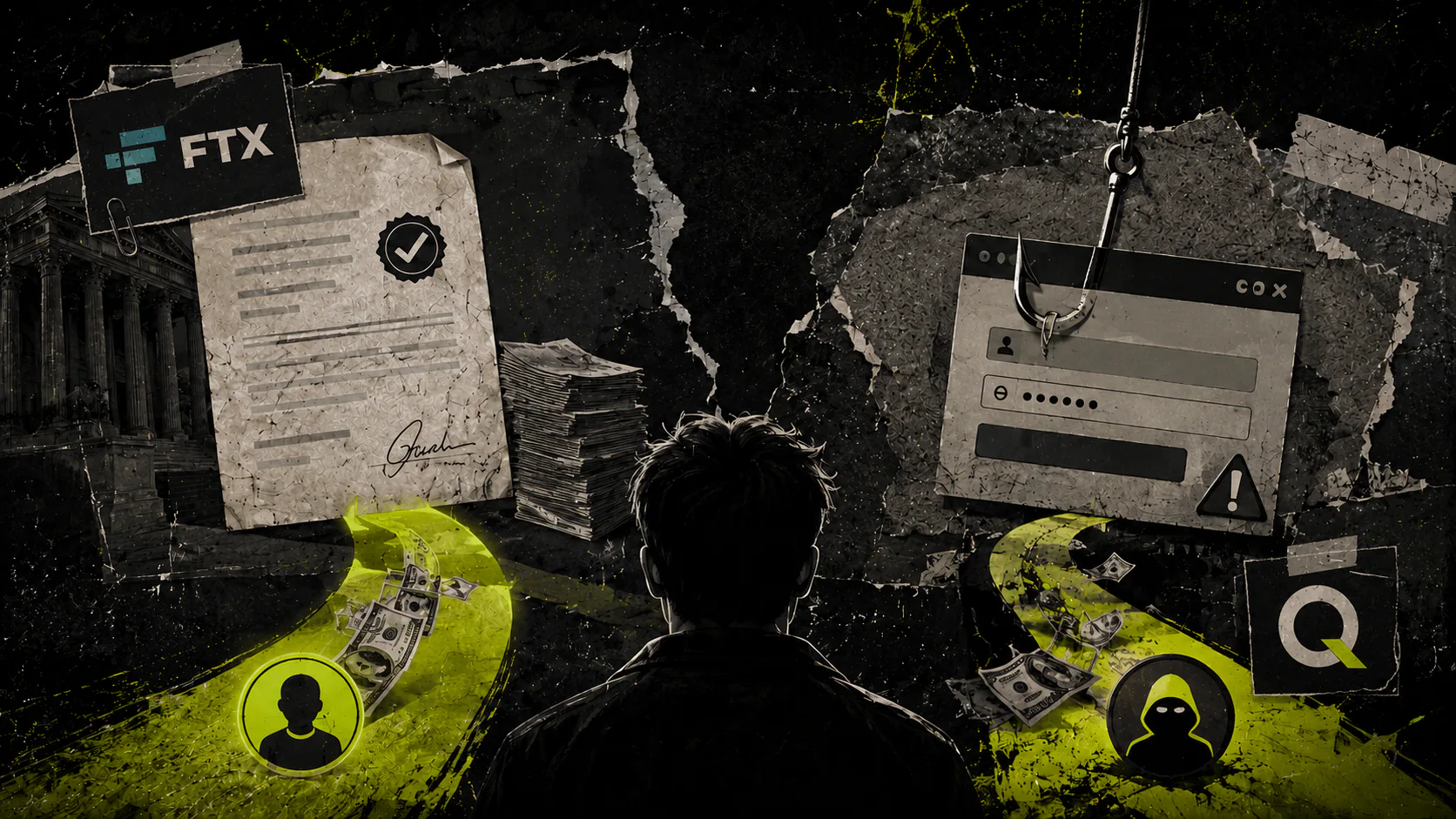
This guide covers the scam patterns that actually target FTX creditors, then the concrete checks that tell a legitimate buyer from a fraudulent one. The short version: a real claim sale runs on a contract and a court process, not on trust in a stranger.
Is Selling an FTX Claim Safe?
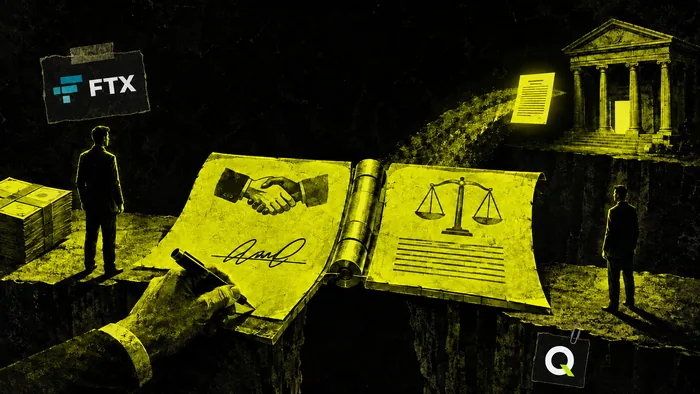
A formal claim sale uses a written contract called a SAC (Sale and Assignment of Claim) and a Notice of Transfer filed on the bankruptcy docket. A written agreement and a recorded transfer help document the sale. They do not replace checking the buyer and the payment terms.
What is not safe is anything that skips that structure. If a deal has no contract, no named buyer, and no court filing, it is not a claim sale at all - it is just someone asking you to trust them with an asset. The scams below all share that one feature: they replace the formal process with a shortcut.
So the honest answer is that the danger is not the sale. The danger is the counterparty. Knowing how to read the counterparty is the whole job.
Fake Kroll and FTX Emails
The most common scam aimed at FTX creditors is phishing. You receive an email that looks like it is from Kroll, the FTX Recovery Trust, or FTX support. It uses the right logos and case number, and it tells you to click a link to "verify your claim," "confirm your distribution wallet," or "complete KYC before you lose your payout."
The link goes to a fake site that captures whatever you enter - wallet seed phrase, identity documents, payment details. Some versions create urgency with a deadline; others promise that a payout is ready and just needs confirmation.
Kroll communicates through its official case portal. Treat any email demanding urgent action through a link with suspicion. Do not click. Instead, open the Kroll FTX portal directly by typing the address yourself, and check your claim status there. A real distribution does not depend on you clicking an email link under time pressure.
Advance-Fee Scams: "Pay a Release Fee First"
In an advance-fee scam, you are told the deal is agreed and the money is ready - but first you must pay something. It might be called a release fee, a transfer tax, an escrow deposit, a Kroll processing charge, or a legal fee. Pay it, the story goes, and the much larger payout follows.
It never does. After the first payment there is a second fee, then a third, until you stop paying. The whole structure exists to collect those fees.
The rule is simple: in a genuine claim sale, money moves toward the seller, never away. A buyer pays you for your claim. You do not pay a buyer, a "claims agent," or a "court" to release your own money. There is no legitimate fee you must pay up front to receive a claim-sale payment or an FTX distribution. If someone asks you to pay first, the deal is the scam.
Off-Docket "Deals" With No SAC
Some offers are not outright theft but are still unsafe: an informal arrangement with no real contract. You are promised crypto in exchange for your claim, but there is no SAC, no representations, no settlement schedule, and no Notice of Transfer planned.
Without a SAC and a filed transfer, nothing is legally assigned. The Recovery Trust still treats you as the holder of record, so the next distribution still comes to you - which gives the "buyer" who paid you a reason to pressure you for it later. If the buyer disappears instead, you have no contract to enforce. You are exposed either way.
A formal sale removes that exposure. The SAC agreement fixes the terms in writing, and the recorded transfer makes the buyer the holder of record so the claim is cleanly off your hands. An off-docket handshake gives you none of that protection.
Fake Claim Portals and Cloned Sites
A more elaborate scam builds a complete fake claim portal - a site that imitates Kroll, a recovery service, or a claim buyer, sometimes advertised through search ads or social media. It may show you a fabricated claim balance and a dashboard, all designed to feel official.
The fake portal then asks you to upload identity documents, connect a wallet, or pay a fee to "release" your balance. Everything you provide goes to the operator.
Protect yourself by controlling how you reach a site. Type addresses yourself rather than following links from messages or ads. The official Kroll FTX portal is the only place to check your real claim status. A claim buyer should be reachable through a stable, named web presence - and the actual sale should happen through a signed contract, not by entering data into a dashboard.
How to Verify a Legitimate Claim Buyer
Where to Check an FTX-Related Message
Use the official customer portal to review your claim and required steps. Use the Kroll case website to check court filings. Neither resource verifies a private buyer's promise to pay you.
| What to check | Official source |
|---|---|
| Your claim status and outstanding steps | FTX Customer Claims Portal |
| A notice or court filing | Kroll FTX case website |
| An email claiming to come from FTX or its service providers | FTX official email addresses and suspicious-message guidance |
Do not rely on a sender's display name or a familiar logo. If a message is in doubt, contact support using details from the official website, not contact details supplied in the message.
Most scams collapse under a few direct questions. Before you share anything or sign anything, confirm each of the following.
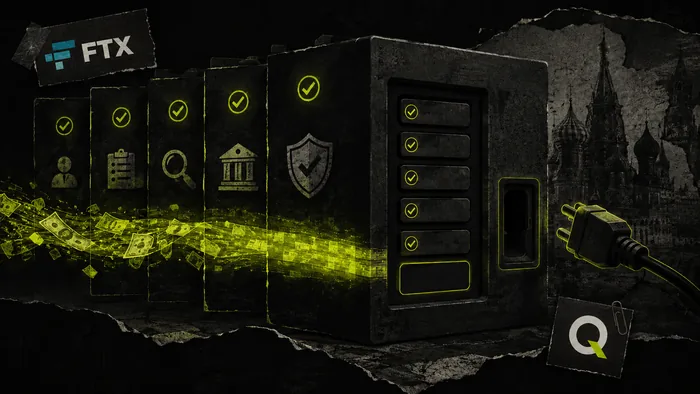
- A named legal entity. The buyer is a registered company with a real name, not an individual, a pseudonym, or an anonymous handle. You should know exactly which entity you are dealing with.
- A real SAC contract. The deal runs on a written Sale and Assignment of Claim that names both parties, identifies your claim, and states the price and settlement terms. No contract means no sale.
- An NDA before documents. A serious buyer is willing to sign a non-disclosure agreement before you exchange claim details, and does not pressure you to send sensitive information up front.
- Settlement defined in writing. The price and the payment timing are written into the contract - not described vaguely as "after processing" with no date.
- No up-front fee. You are never asked to pay a release fee, tax, or deposit to receive your money. Funds flow to you.
If a counterparty fails even one of these checks, stop. A real buyer will pass all five without complaint, because all five describe how a normal claim sale already works.
Why the Formal SAC Route Is the Safe One
Every scam in this guide works by replacing the formal process with a shortcut: a link instead of the real portal, a fee instead of a payment, a handshake instead of a recorded transfer. The defence is to refuse the shortcut.
A formal sale through a SAC and a Notice of Transfer is slower than a Telegram promise, and that is the point. The contract fixes the price before you sign. The objection window and the recorded transfer make the result final and verifiable. Your identity documents go only to a named entity under an NDA, and money moves toward you, never away.
Qredax uses that formal route for every purchase - a named entity, a written SAC, an NDA before documents, and settlement in USDT defined in the contract. It is not the fastest-sounding offer you will ever get. It is the one built so that no part of it depends on trusting a stranger.
Check what your claim is worth
Enter your customer code - we will show an estimate that accounts for class and KYC status. Free, no obligation.
Open the calculator